The Soul of a House
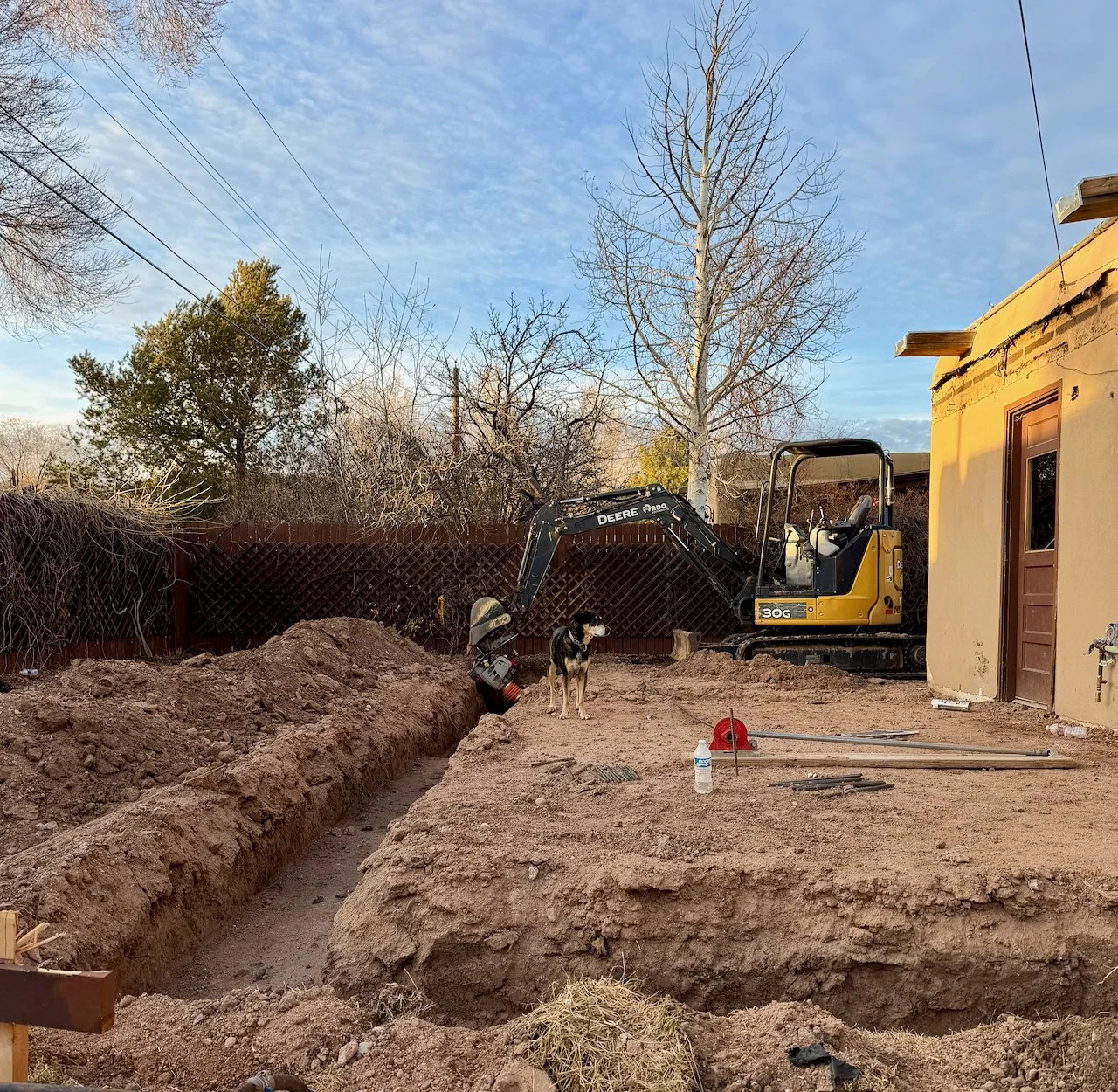
Renovation season begins at our little 1950s Santa Fe house.
Remember that storm that probably dumped a foot of snow a few weeks back, if you were east of the Mississippi and north of the Mason-Dixon line? It left a mere dusting in Santa Fe and a day or two where the temperature didn’t crack 20F. That didn’t stop Santa Feans from flocking to the grocery store in a panic like it was March 2020. I’m relieved to tell you we made it through. And now the temperature has climbed into the low 60s. The birds and plants seem understandably convinced that it’s suddenly April and I myself am in a state of constant sartorial confusion. For all my underlying worries about the climate and the encroaching wildfire season, last week was a great week to start work on a major home renovation project.
I live with my family in a neighborhood developed in the 1950s by a beloved local builder named Allen Stamm. Despite the nearly identical floor plans of all the houses, you could get them in a variety of styles—faux Pueblo, territorial-ish, and knock-off European modern. These little houses are indisputably sturdy—every realtor in town will tell you they have “good bones.” But they were also meant as affordable postwar housing which means that despite the very solid construction, certain corners were cut: the original HVAC ducting was made out of thick cardboard tubing. We stripped much of our Stamm to the studs when we bought it during the pandemic. I probably inhaled more paint fumes than a pregnant person should. We won’t mention the asbestos tile that was under the carpet.
After that big initial push to get the house ready for a baby, we’ve lived with our home in pretty much a static state since our daughter was born in 2021. Sure, there have been changes to the garden, and a few key furniture upgrades, but we’ve mostly treated our home as “done.” We’ve lived with mostly bare walls and without a proper dining table because there have been other priorities (like writing a book and our respective full-time jobs and entertaining a very active toddler). But as our daughter has gotten older, we’ve started to think about the relative sustainability of living in what was really purchased as a starter home. When we bought it, our realtor speculated that we’d probably be here for 3-5 years. It’s the kind of midcentury one-story house where all the bedrooms are crammed together, and you can see from one end of the house to the other. We’ve all been sharing a bathroom since our daughter decided that the number of spiders in the half bath she had previously used had become untenable (to be fair, there are a lot of spiders, including the occasional black widow).
For the past few years, we’ve been toying with the idea of building an addition. We hired our neighbor, a well-regarded Santa Fe architect, who has personal experience enlarging these robust little Stamm homes. We’ve hemmed and hawed and tweaked the plans and have absolutely been the most insufferable clients. At some point last fall we had exhausted the invented reasons for which we had been dragging this out. We pulled the permits, picked a contractor, and got a loan.
Work started last Monday. Our ace contractor and his crew have been at our house by 7:30 each morning and they’ve worked until 5. Our dilapidated carport has vanished, along with the crumbling brick patio that for several years has been little more than a weed cultivation zone. This week they’re digging the foundations, putting in the drainage, ripping off the sagging portal over the front door.
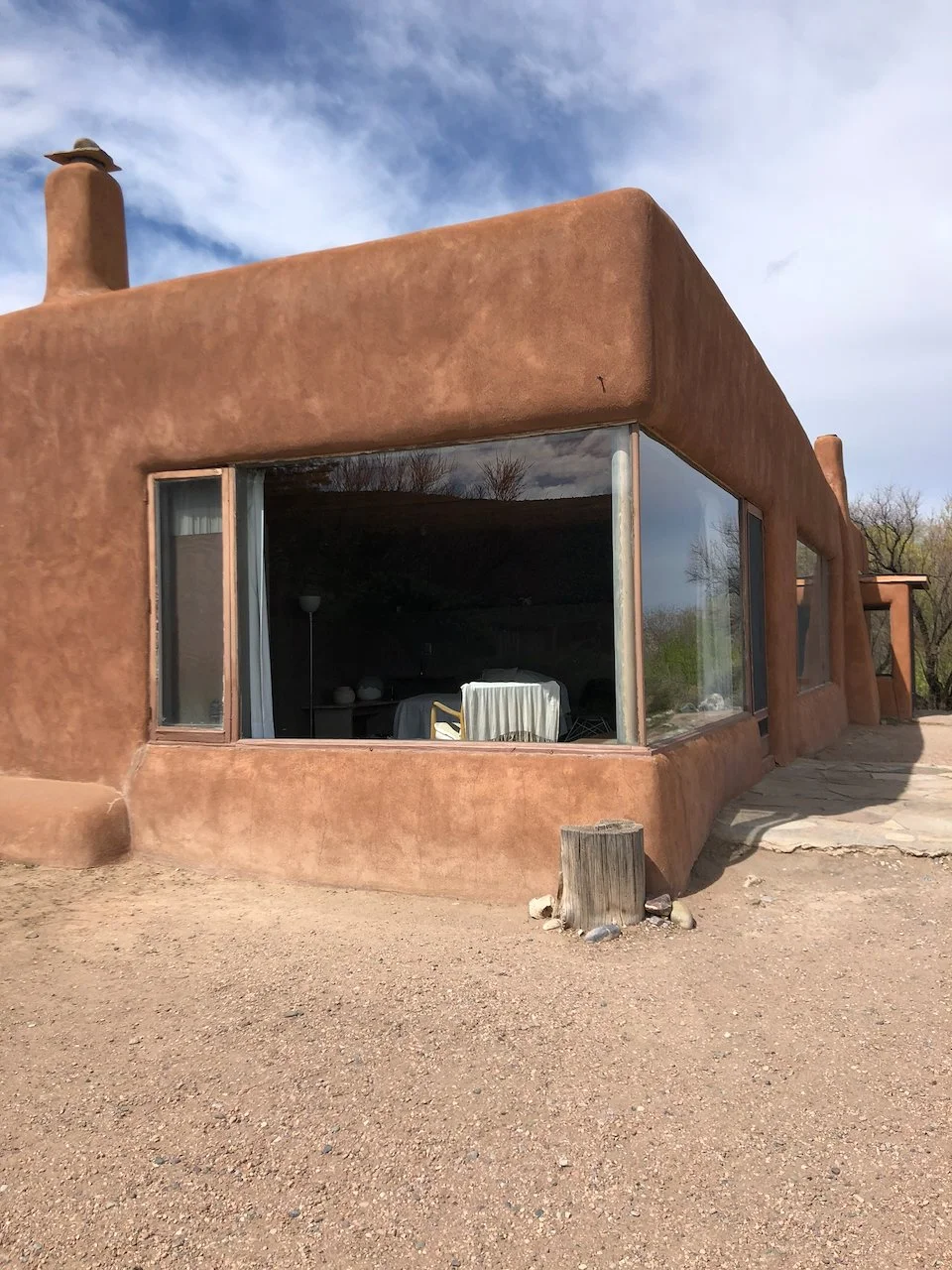
O’Keeffe’s bedroom at Abiquiu. She loved a wraparound window so much that she did this again (twice!) at her Ghost Ranch house.
I’ve been thinking a lot about O’Keeffe and Wright since our construction started—they were both restless and relentless renovators themselves. Neither of them fell into the trap of feeling like their homes were ever “done.” On top of the well-publicized campaigns of building and then rebuilding at Taliesin (following the devastating fire and murders in 1914 and then a less catastrophic electrical fire in 1925), Wright constantly tinkered with the interior flow and layout of his both Taliesin and Taliesin West. There’s a wonderful anecdote in one of Olgivanna Lloyd Wright’s books about the fact that he would do this to hotel rooms, too. Imagine showing up at a nondescript Holiday Inn with bouquets of flowers, some tasteful throws, and maybe a floor lamp (#lifegoals?). And O’Keeffe, despite working with heavy adobe walls in both her homes, was also prone to visions and revisions. At her Abiquiu home, she added fire places, took them out, built adobe hassocks in her living room and then later removed them again. She knocked out the window of her sitting room in the mid-1960s and replaced it with a picture window. She would try something at her Abiquiu home—a corner-wrapping window, for instance—at one home, and deciding that she liked it, repeat it at Ghost Ranch. For both O’Keeffe and Wright, this constant domestic rearranging and reinvention was deeply related to their artistic practices, a source of aesthetic and creative inspiration right up there with the American landscapes they both loved deeply.
Today, all of that constant fussing and upheaval is a preservation challenge, and an interpretive one. Knowing that these homes and studios were in constant flux during their occupants’ lifetimes, where do you set the clock? Do you pick a moment and keep it static there or do you let it change? When I visited Taliesin for the first time back in 2023, it was the week in March before tour season started. The stewards were hard at work. Furniture was pushed near the walls so that the carpets could be cleaned and the yard sculptures were starting to emerge from their protective winter covers. It felt in that moment how it maybe felt during the Wright’s lifetime: the apprentices who stayed at Taliesin year-round readying the house and farm for the master’s return as summer approached. It was exciting and unexpected to feel the dynamism of the house. It’s also not what we expect from our house museum visits. I could feel the palpable disappointment of the tours who intersected with me while I was staying at Tan-y-Deri last October. Who was this random woman in sweatpants at the dining room table drinking coffee and working on a laptop like this was an AirBnB and not a UNESCO world heritage site? I was clearly spoiling the illusion that the house was untouched and unchanged since the home became part the Taliesin estate in the 1950s.
Meanwhile, O’Keeffe’s home in Abiquiu has been kept largely as it was in the early 1980s, when O’Keeffe relocated to be near medical care in Santa Fe during the final years of her life. She had mostly stopped creating art at that point. The studio today thus looks foreign to the photographs we see all the way up through the 1960s, where O’Keeffe sits before her canvas and brushes, surrounded by all the trappings of an active, productive painter. In the end, the staging of these spaces is all about storytelling. These were lived, used, embodied spaces. It’s all about the stories of that use we think are the most valuable or interesting to tell now.
I’m thinking about the stories we tell through our environs sitting in the living room this morning. There’s the metal Moroccan tabletop we found at a thrift store in Michigan, perched on top of John’s grandmother’s Danish midcentury credenza. Above it hangs a bright yellow paper-plate sun that our daughter made when she was two, which bears the same approximate expression as the straight-line mouth emoji. Something about this constellation of items speaks to something truer and deeper about the house than our rotating cast of curated throw pillows in soft millennial colors or anything of that ilk. There’s some aura to these things… they are specific to us and our story. I’m trying to hold that now as our house takes on new form; that the house and the story are ideally one and the same.