Soaking with Strangers
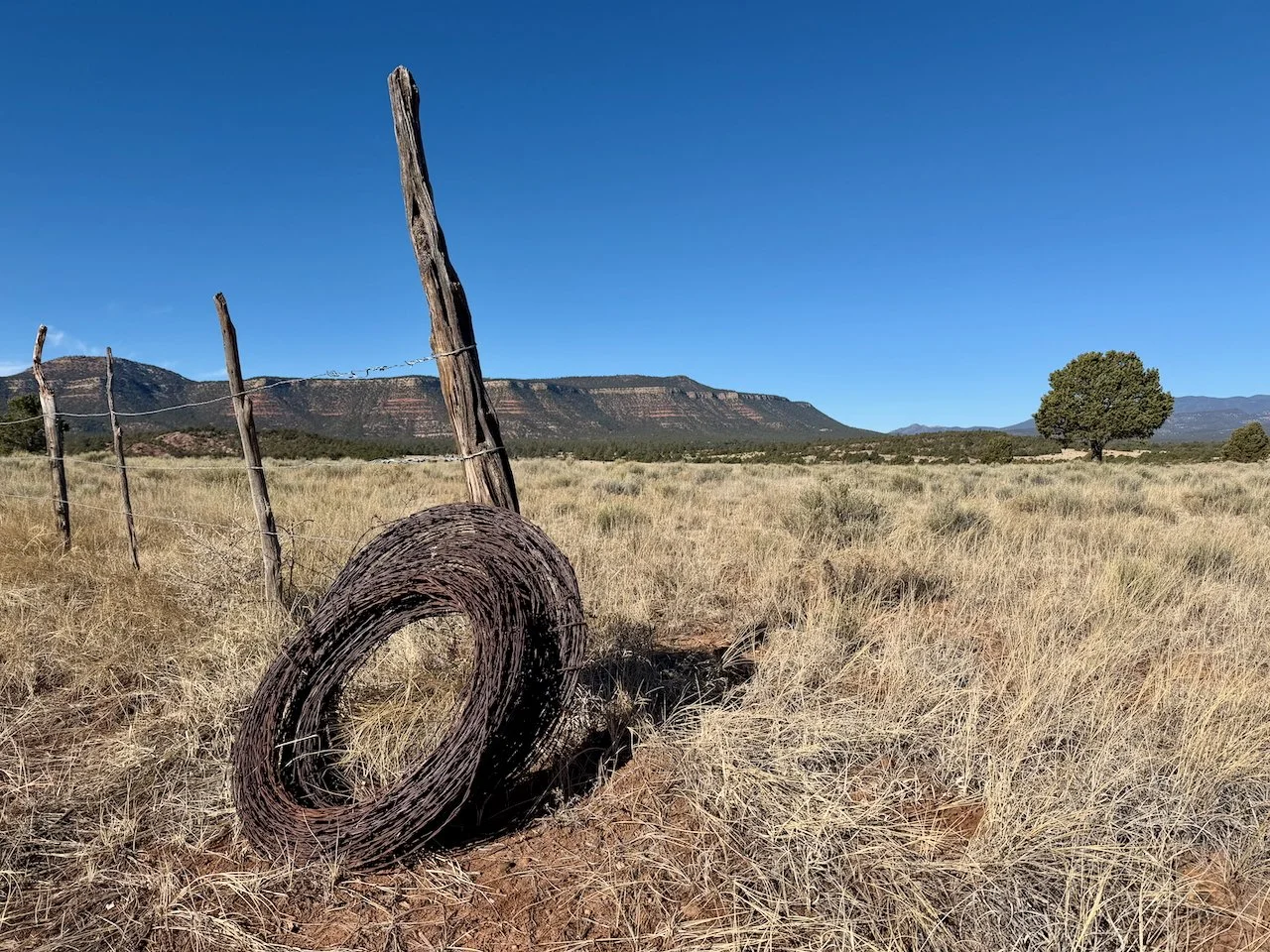
Hiking in the Pecos; gotta get your bail of barbed wire for maximum atmosphere.
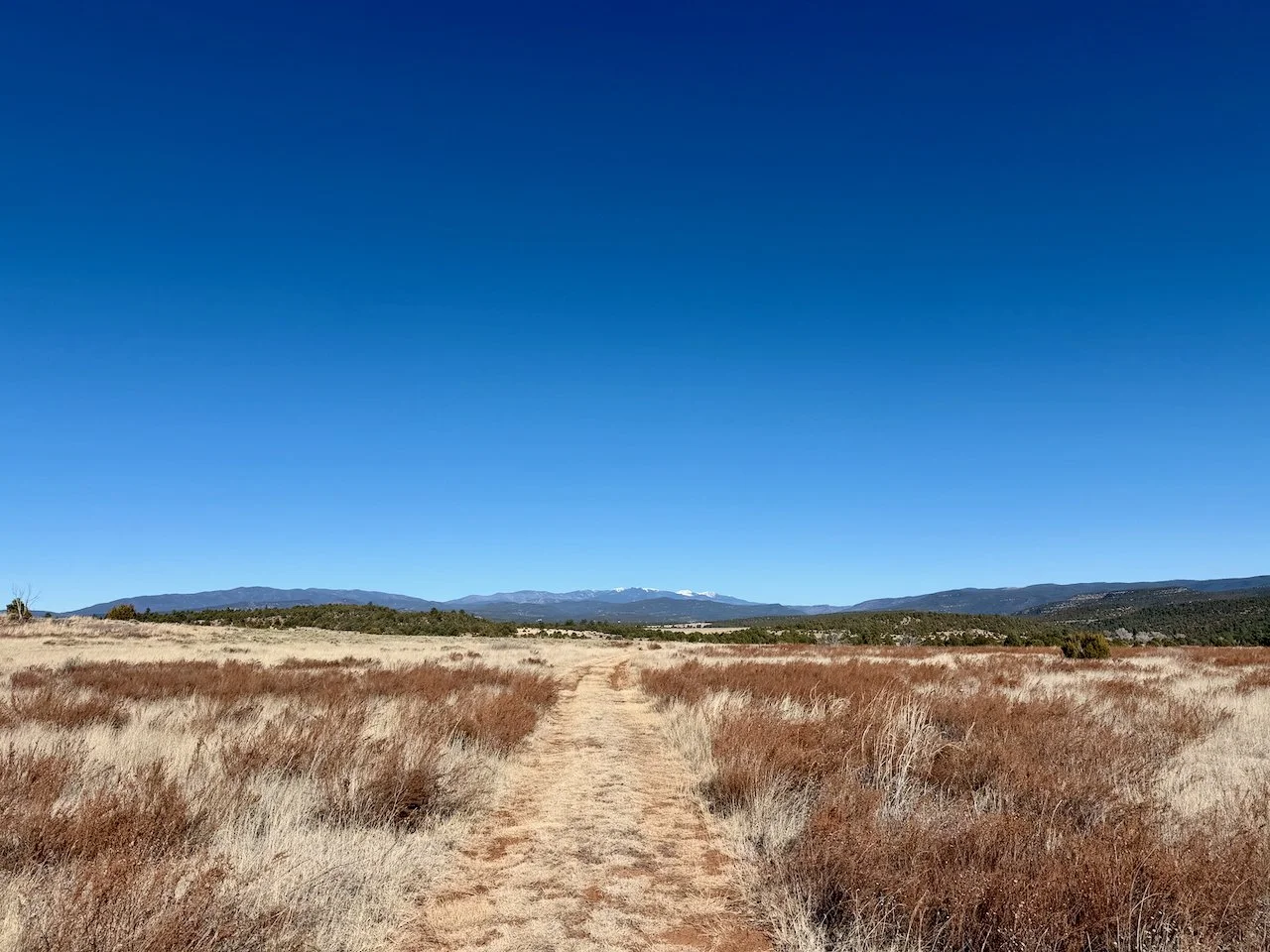
I would say the “South Pasture Trail” was as described. But those skies! Never gets old.
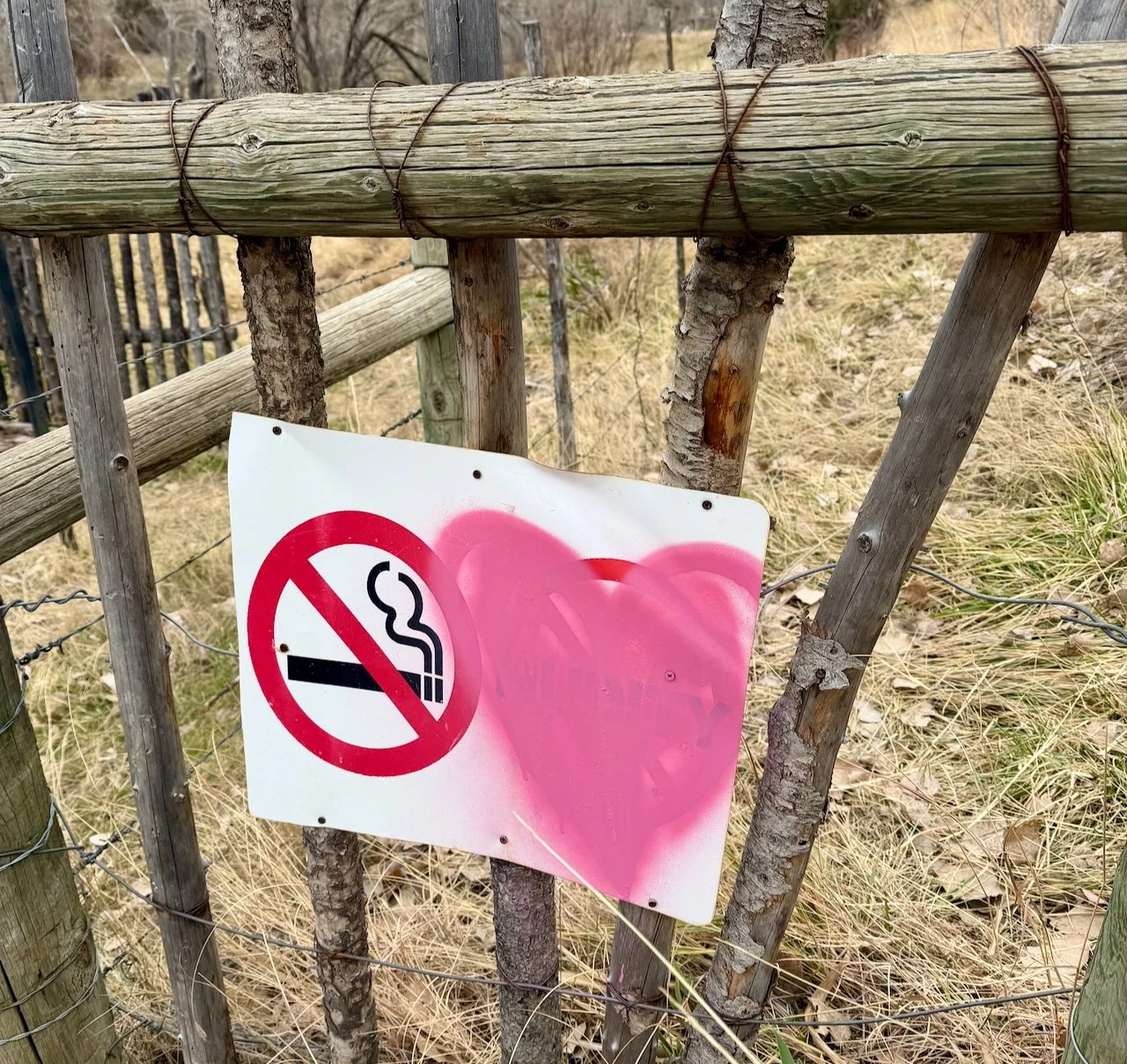
We’re okay with “no smoking” apparently, but the “no nudity” signs have been all artfully decorated in protest.
I’m standing here in the turreted shadow of an 1880s hotel-turned-boarding school, shivering in a swimsuit while snow languidly filters down from an ashen sky. The thirty mincing, sandaled yards from my impromptu changing spot (read: a stand of pine trees with less strategic branch cover than I would desire) back to the hot springs seems to elongate in some deep, relativistic way. My commitment to this plan hasn’t wavered but I’m starting to wonder if the friends I recruited are regretting their decision to tag along for what I had advertised as “a real northern New Mexico adventure.” We’ve just hiked at Pecos National Monument, where the views were stunning but somewhat tempered by a vicious headwind. Now we’ve found our way to Montezuma Hot Springs. It’s a mostly-locals spot tucked into the side of a highway near Las Vegas that maybe invites a little debauchery at certain times of the year, but everyone today is dutifully wearing a bathing suit (the signs banning nudity are plentiful, though some have been artfully graffitied over). There’s no entrance fee or towel service but you’re guaranteed to meet some characters out here.
I came here for the summer solstice with some girlfriends a few years back and we found the pools too hot to tolerate for more than a moment. We ended up soaking in the lukewarm runoff from the springs in the river below, emerging with our swimsuits coated in a veneer of mud and algae. Today, the river has a thin gloss of ice across it and the pools feel just right. A few members of our party brave the “lobster pot” and emerge a violent shade of pink. It’s a far cry from Ojo Santa Fe, my usual posh spa haunt, with its coterie of Gen Z-ers taking bikini-clad selfies over the side of the pristine blue pools.
My friends and I settle ourselves into a pool that fits our group but just barely; the six-foot-plus husbands crammed in on either side and girls in the middle. Other bathers filter in and out. There are a few couples, some clusters of women, a few singletons. The age range is anywhere from mid-twenties to mid-seventies. The pools are close enough to each other that you’re necessarily implicated in the conversations of those around you. When the warmer pool above us suddenly has room for one more, a woman in a black suit and gray beanie beckons me up, “Come on in. This isn’t the Ritz.”
The usual markers of class somehow dissolve here. Winter and lack of clothing are great equalizers: no one looks particularly radiant or charming in January in a swimsuit and fuzzy hat. The array of cars on the highway above hints that our fellow bathers are from all walks of life but after you’ve descended the railroad tie stairs and shed your outer layers it doesn’t really seem to matter. For a few moments, everyone is just a body, equally subject to the mortification of toweling off in front of strangers as the post-soak shivers set in.
There are precious few truly democratic spaces (that’s little d “democratic”) left in this country and most of them are pretty depressing—think the line at the pharmacy or the post office. Places that are unavoidable by all social classes are not usually the most uplifting; you’re there because you have no alternative. Frustrations run rampant.
There’s a certain democracy in late stage capitalism, as perhaps captured best in the words of Andy Warhol:
“What's great about this country is America started the tradition where the richest consumers buy essentially the same things as the poorest. You can be watching TV and see Coca-Cola, and you can know that the President drinks Coke, Liz Taylor drinks Coke, and just think, you can drink Coke, too. A Coke is a Coke and no amount of money can get you a better Coke than the one the bum on the corner is drinking. All the Cokes are the same and all the Cokes are good.”
But that’s not exactly what I’m talking about. Maybe it’s even the opposite of Coca-Cola; that most universal of branded libations. What I’m trying to get at are those places and experiences that are unique to a specific place and intensely layered with history.
Like many of the hot springs in the U.S., Montezuma Hot Springs was a sacred site for Native peoples long before the Europeans showed up. Years ago, when I did a project on the springs at Ojo Caliente, I remember reading that this at these sites, tribal affiliations and any inter-tribal tensions were set aside to retain the peace and equanimity of the sacred waters. Of course, these accounts come through Anglo settlers eager to sell others on the health benefits (and mystical credentials) of the Southwest. But it’s a good story. Gazing up at the old Montezuma Hotel, now the United World College, it’s hard to forget the legions of health-seekers who descended on sites like these during the late 19th and early 20th centuries. I know—the bathhouse is gone and the pools have changed and we’re no longer trying to cure tuberculosis by soaking in hot water. But there’s something a little uncanny about the thought that at some spiritual level (or at least microbial level, if you don’t swing that way) we’re all just kind of stewing here together with centuries of ghosts.
Meanwhile, more bathers have arrived and there’s a sudden and palpable sense that our time has ended. Hunger is mounting and it is becoming increasingly difficult to find a sustainable place to rest one’s limbs on the pool’s jagged bottom. I return to my makeshift changing area, draping my robe over some branches for extra coverage this time. I am profoundly thankful to my goose-fleshed body—exquisitely perfect for all its imperfections—for getting me here. I am thankful to all the other bodies who found their way here today on a freezing holiday Monday to commune with something bigger than Coca-Cola and deeper than the springs in the rocks.