Life on Book Tour: If I Knew Then What I Know Now
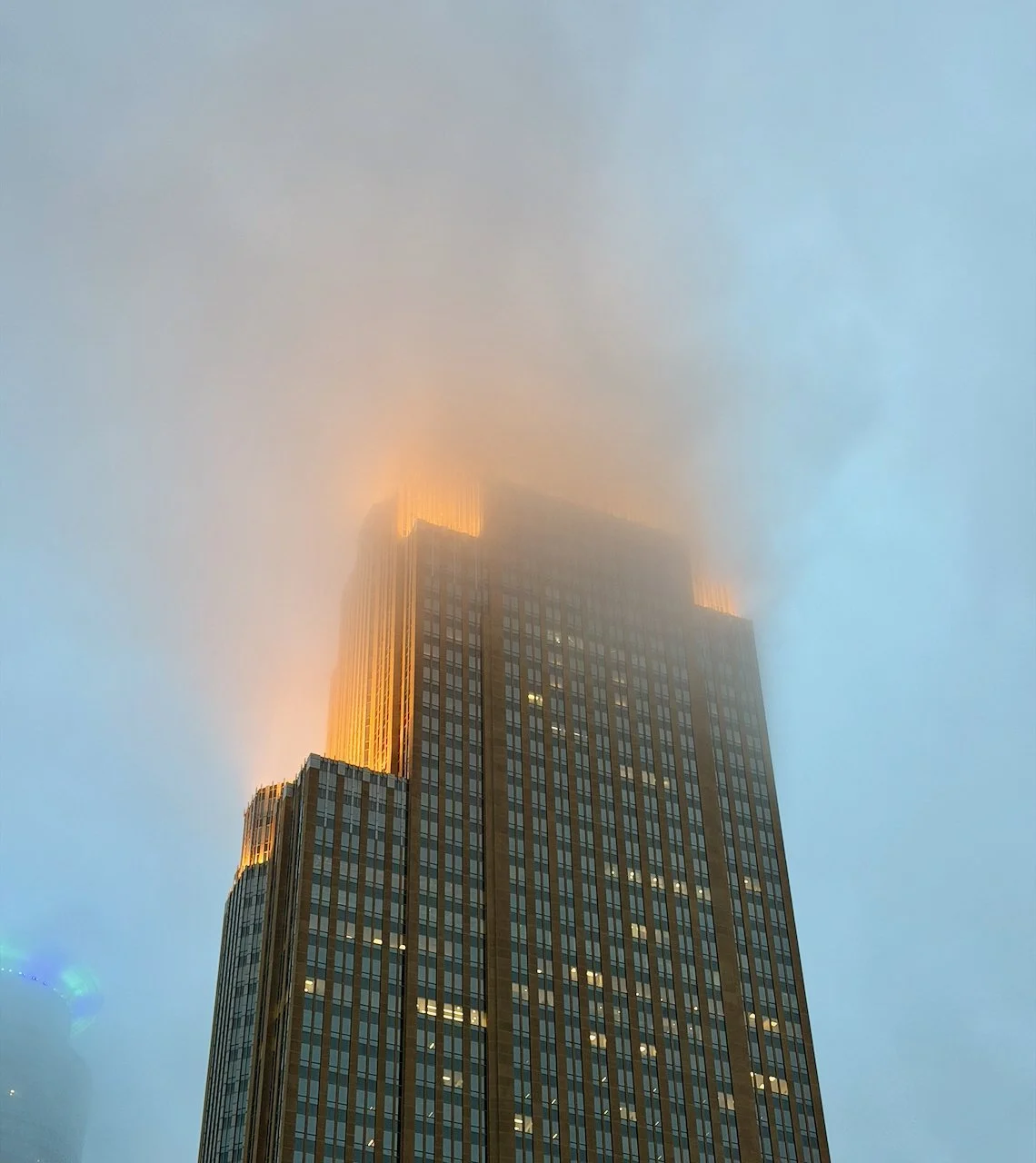
Mysterious misty evening in Minneapolis on a recent work trip.
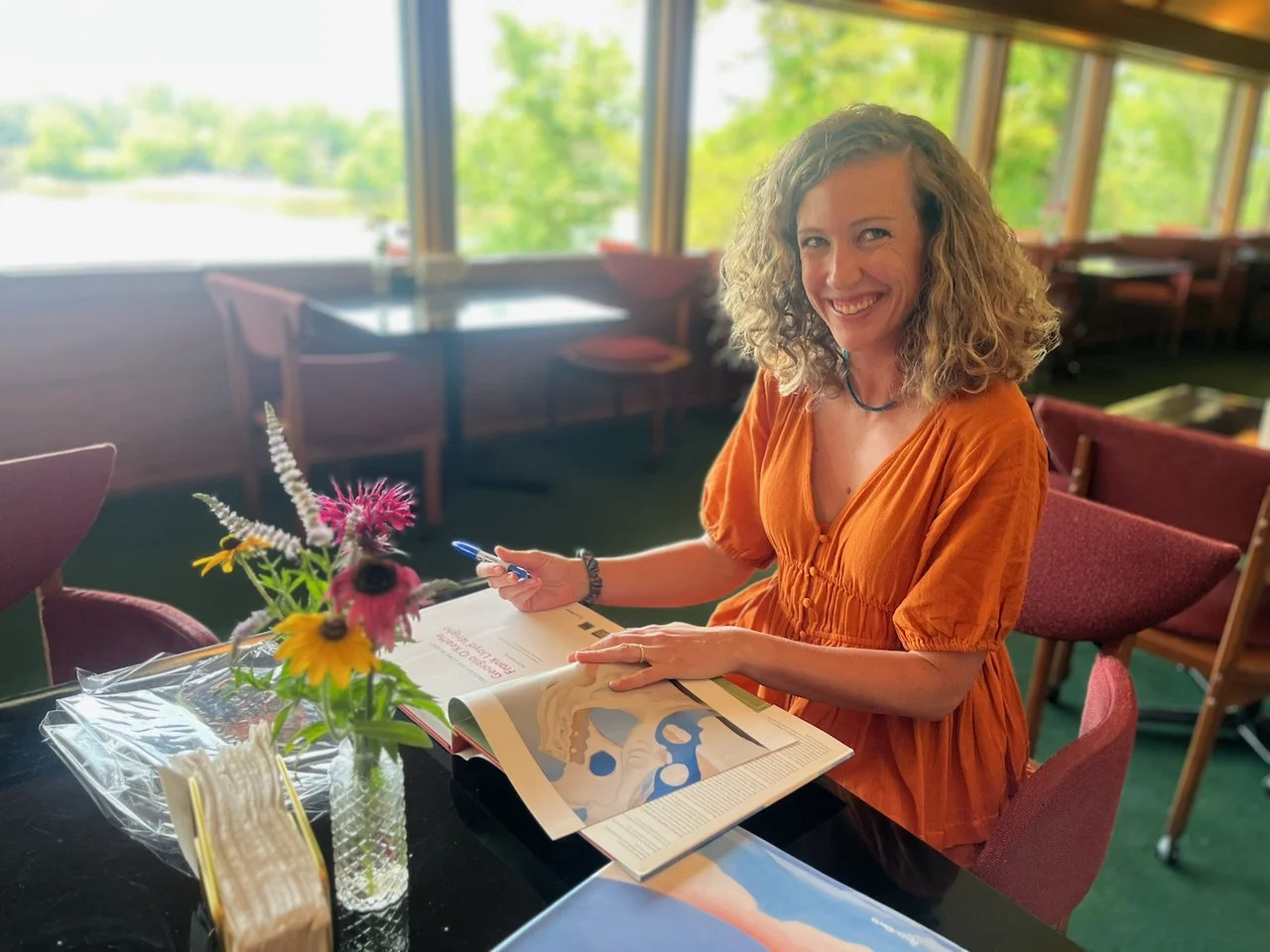
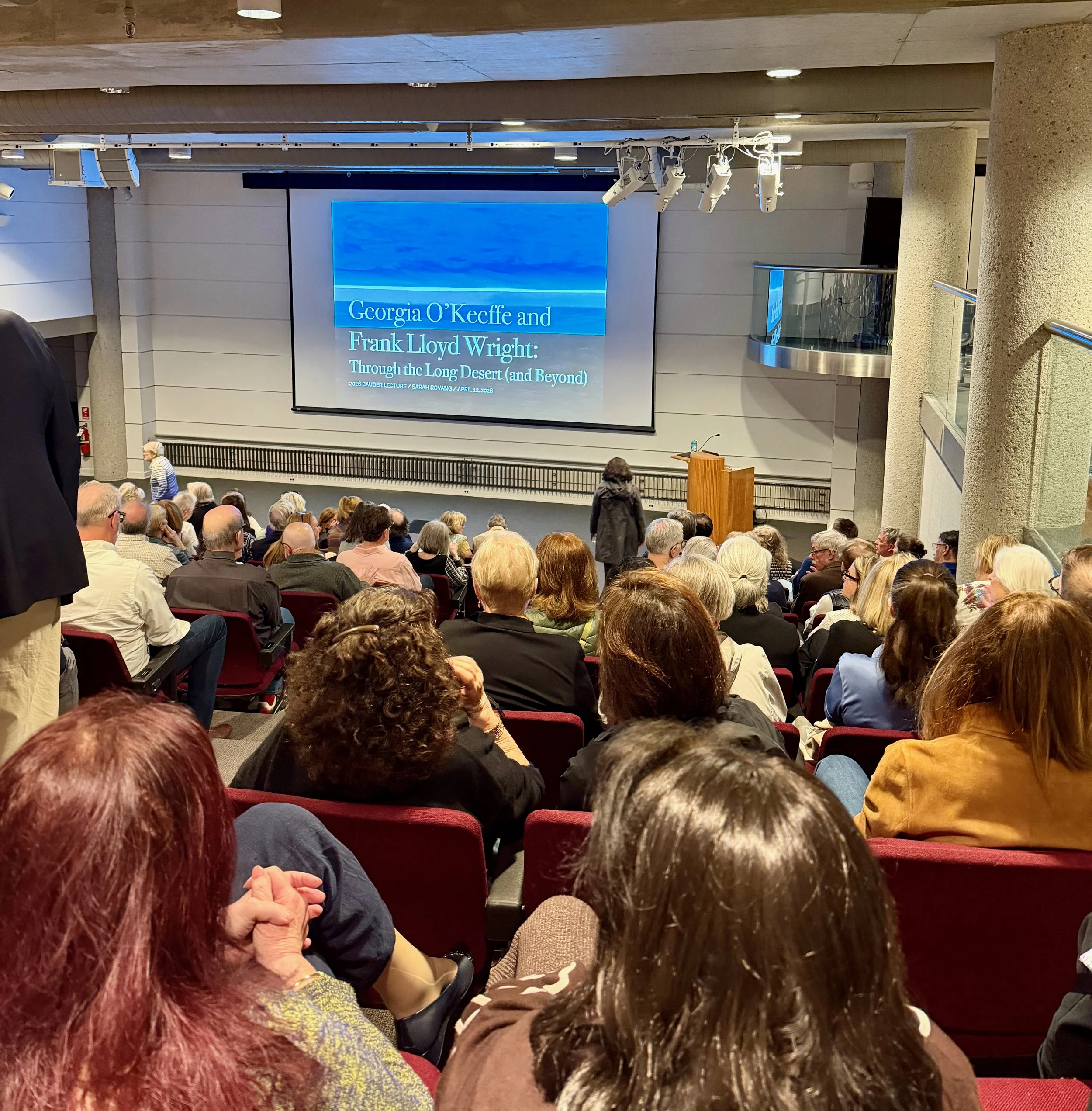
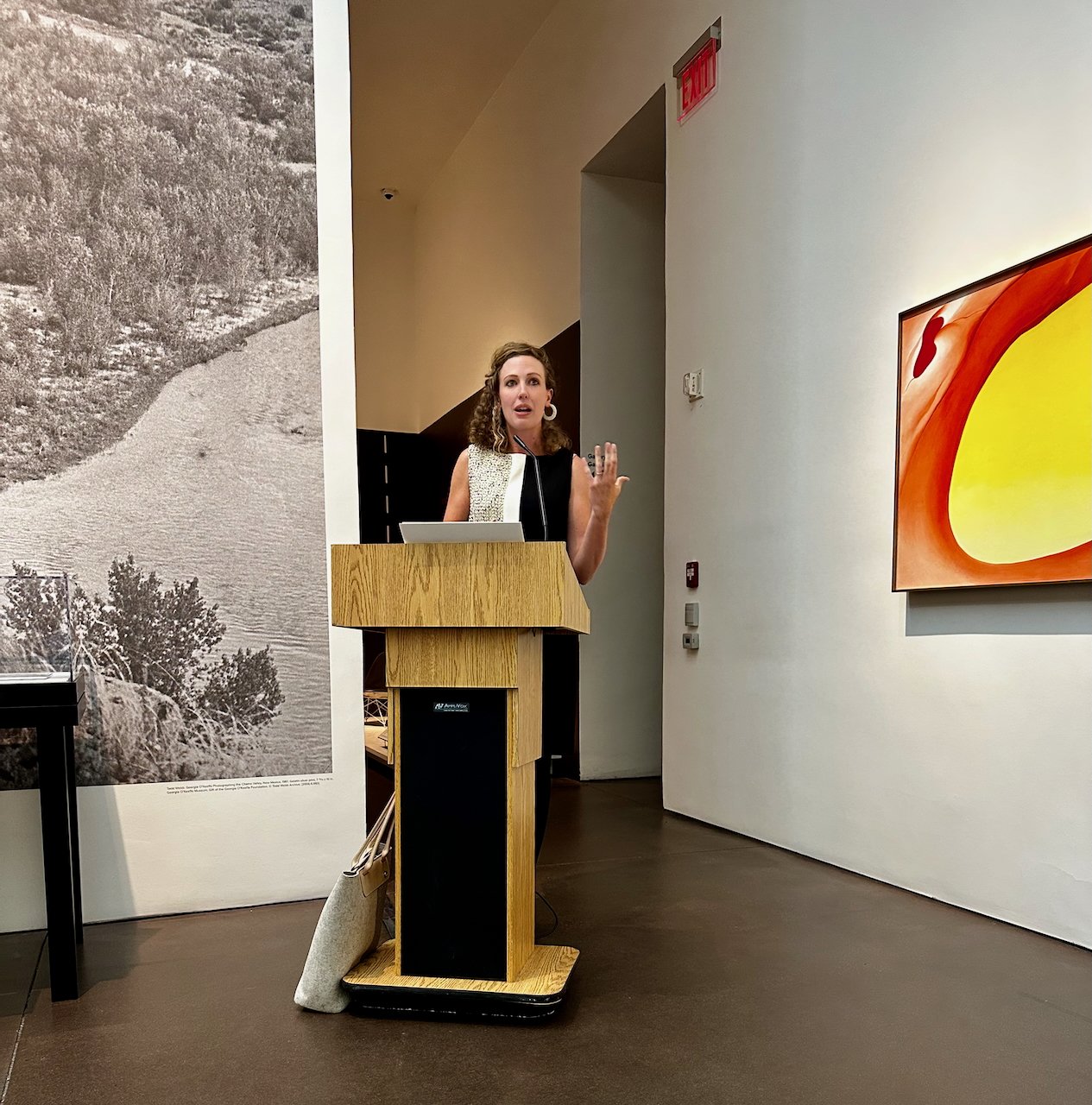
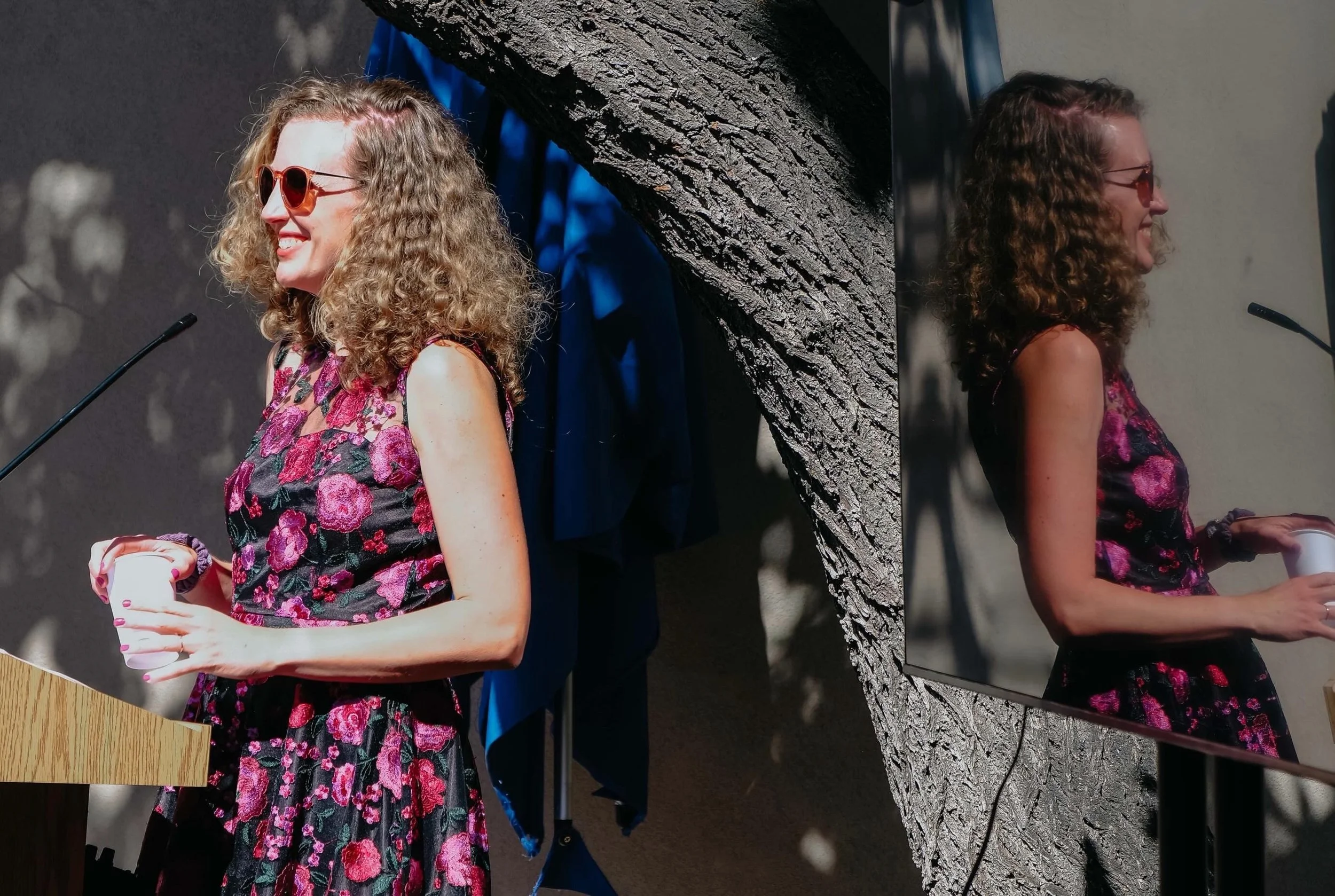
Thanks to Moonlight Studios for the great pics of this event.
I’ve been traveling for my day job this week in Minneapolis. The best moments at a conference for me happen on the margins, the stolen moments at the start and end of the day. In this case, I slipped out to explore the city’s labyrinthine skyway system and ended up getting so turned around that I had to make my way back on surface streets through the rain. In a year, I won’t remember the panel on data validation or the awkward reception. But I’ll recall the skyscrapers cloaked in mist— seemingly crowned with unearthly fire as twilight settled in—and the exotic aroma of cedar incense in a Japanese whiskey bar.
Memory is funny that way. It’s the things that were never supposed to matter that end up following us around like ghosts. That is certainly how book events have felt. It’s been over a year since Through the Long Desert was released and in that time I’ve done at least a dozen book events in six states. The talks themselves are all one continuous corpus in my mind; the same jokes, the same stock lines, the same way that I (predictably but genuinely) get choked up reading the O’Keeffe-Wright letters. It’s everything else that distinguishes each event: I remember the dress I wore, the intangible qualities of season and place, the impromptu conversation with a stranger.
Part of me has balked at writing this dispatch. It hasn’t come as easily as the others. During my mini writing retreat at Bonnie Oaks in Wisconsin this summer I felt for the first time my creative soul arching forward toward the next project and the desire to put Frank and Georgia to rest, at least for the moment. Why look back, then? I’ve done plenty of self-excavation and soul-baring in this newsletter already. It does seem like at some point introspection crosses the line into narcissism or at least unproductive rumination. So maybe this is a document more for some future self, five or ten years from now, who will be glad for the effort. And maybe I could extend some grace to my past self, who little knew what this first year of the book would entail. So here it is: the things I wish I had known on release day, September 9, 2025.
What’s it actually like doing a book signing?
I’ve never done improvisational comedy but I think you need some of the malleability, the receptivity, the agility of improv when you show up as an author at a book signing. You’re sitting, strangely prone and vulnerable at a table while people loom over you to observe the intricacies of your signature, weigh in on your inscription. You’re cognizant of the queue but also wanting to be fully present with the person right in front of you. There’s a delicate dance of making sure that the signee feels seen, heard, and valued, and also that the line keeps moving. Some people bring their anecdotes. They’re here to tell you what they’re showing up with—what they’re bringing to the work. To those people you smile, you ask follow-up questions. You honeymooned in Spring Green? Your mailman met O’Keeffe in the 1970s? I am here for it. Some people are going to ask a question. Many of the questions are shades of the same thing—how long did the book take to write, what surprised you most—but occasionally you’ll be stumped, taken off guard. Some people weren’t expecting to be there at all, and it was some twist of fate that brought them to the signing table today. They’ll explain the circumstances as though you’re all in a romcom meet-cute. Whatever your patrons show up with, you’re there to “yes, and…” — to be the limpid pool into which memories and aspirations can be projected, if only for a moment. Sometimes someone shows up who you know, who was an inspiration or mentor, and the pressure to say something meaningful and poignant hits with all the mortification of signing your high school crush’s yearbook. So if I wrote something suffocatingly cringe-worthy in your copy of Through the Long Desert; I apologize. It’s probably just because I admire you.
What’s the difference between Wright fans and O’Keeffe fans?
Wright fans tend to operate like collectors. They are going to tell you about their favorite Wright sites. Some are going to reel off the canonical ones. Others are going to try to impress you by knowing an obscure building or project; having an in on a privately-owned house or even being an owner themselves. With Wright, much of the fascination is about the work, about the pilgrimage to the buildings. You might get the occasional reference to leaking ceilings, fires, and murders (the unholy trifecta of Wright hagiography), but mostly fans just want to tell you how they met their future spouse at Fallingwater. By contrast, O’Keeffe fans are more likely to possess some deep and ineffable connection to the painter’s biography. No one has ever come up to me at a book signing and asked my thoughts on Wright’s second wife (rather a hot mess!). But plenty of folks, including some leading scholars of O’Keeffe who I’ve had the fortune to meet, are all too keen to gossip about the painter’s sexuality, her relationship with Juan Hamilton, the sundry character flaws of Alfred Stieglitz.
I’ve enjoyed meeting them all, the variety and intensity of these conversations; how they’ve made me question my own assumptions. I’m tickled too, when a fan of Wright or a fan of O’Keeffe expresses a little reservation about the other character in that book—“That Wright, kind of an egoist, eh?” they’ll say or “I’m not sure about all of her paintings of… you know” (they wave their hands vaguely, I assume to indicate flowers bearing certain resemblances to the female anatomy). But I like pushing readers a bit; daring lifelong fans of either the architect or painter to maybe see things in a new light.
How do you react when people have different interpretations of the text from the one in your head?
At a recent event, a gentleman approached me with my book tucked under his arm. “I enjoyed the book,” he told me, shrugging his shoulders, “But isn’t it in the end rather unsatisfying? You can’t really say much for sure about the relationship between them for sure. Isn’t it all speculation?” To be fair, I say as much in the book’s coda. And a year ago, such a comment that seems to question the very premise of the book might have gotten under my skin. But now I’m fundamentally at peace with the ambiguity in the book. I don’t mind that it’s gestural, slippery, poetic. That was part of the joy of writing it. I had the opportunity to make some interpretive leaps but there is also plenty for the reader to fill in as well. It’s a different form of history writing. And I’m okay that it’s not for people who are married to empirical facts or averse to the uncertainty inherent in human relationships.
Ultimately, what you think about these two historical characters, I’ve realized, is less a reflection of anything in the book than it is of the reader. After my talk at Cranbrook in March, a group of friends approached me. “You really think they were just friends?” one woman asked, leaning in, “I mean… those letters… it sounds like there’s something more there.” She raised her eyebrows suggestively. I think I gave some suitably noncommittal empiricist answer pointing to archival evidence. But the implication unnerved me. Maybe it was how I delivered my talk? Was I doing O’Keeffe a bit too husky, too confessional? Wright a little over-eager? If Wright and O’Keeffe, paragons of twentieth-century creativity, couldn’t be just friends as a man and a woman, then who can? If their friendship couldn’t stand for something pure and artistic, what does that mean for the rest of us mere mortals trying to navigate the tempests of our own egos and vanities? So lost was I in my own existential quandary that I momentarily lost track of the human who had put forth this query. Who was she thinking of in her own life when she asked that question, which was so clearly more to her than just historical gossip? I’ll never know, but these little moments are the glimmers that slip into new pieces of my writing.
How do you know when you’ve overcommitted to the whole book tour thing?
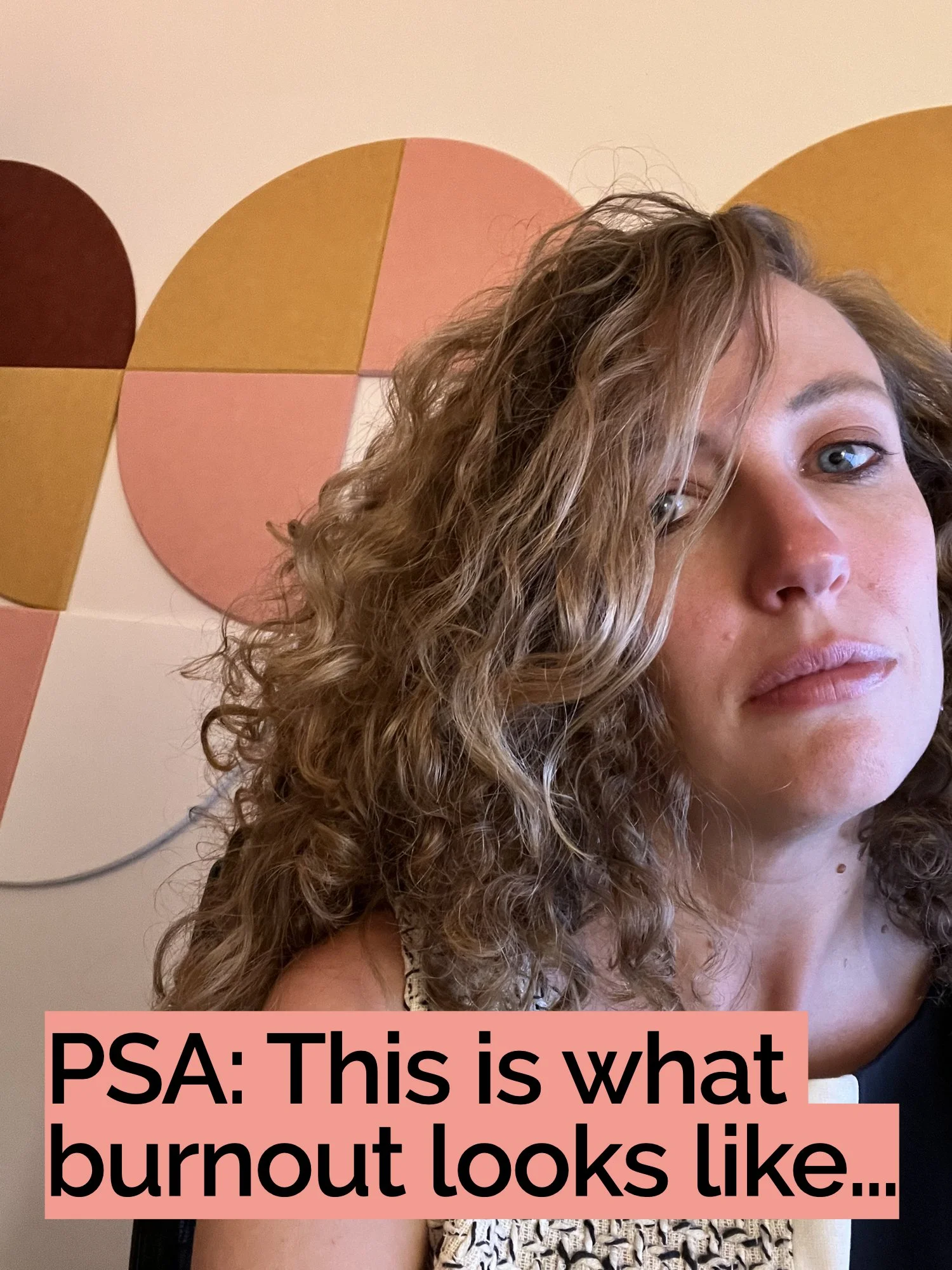
I guess when you’re on the floor of your office having chest pains with at least three more events scheduled in the next month? I joke (kind of) but honestly there’s probably no way to know until you’re in it. Had the circumstances of my life been different, the number of events I put on my calendar last fall might have been totally manageable. As it was, the book tour opened the proverbial Pandora’s box of backlogged interpersonal stuff that I had been studiously sweeping under the rug for several years (to mix some metaphors).
Having a full-time job and a partner and a small child and a neurotic rescue dog and trying to make a book tour happen simultaneously is not a life choice I can wholly condone. People sometimes ask “How do you do it all?” (a question, I have a feeling, that gets asked less frequently of men). I perkily reply, “At great personal cost to myself and my family!” Mostly, my interlocutors think I’m kidding. If it is funny, maybe it’s gallows humor—the knowing grimace that sometimes comes with unrepentant candor. I asked a lot of my family. I asked a lot of myself.
Was it worth it—the events, the social media—for some little shred of manufactured and minuscule notoriety?
Despite the fact that I spend the bulk of my day job calculating the return on investment of various state programs, I have no real way to measure the ROI of any of this. Which events connected? Which Instagram posts brightened someone’s day a little? Which newsletters helped someone who was struggling see that even luminaries like O’Keeffe and Wright struggled too? In the end, I’m doing most of this for myself, putting it out in the world with the hope that it will resonate or will ricochet its way into inspiration.
If this book can be your gateway drug to abstract art, I’ve succeeded. If this book can get you to call an old friend, I’ve succeeded. If it inspired you to visit a new museum or make a pilgrimage to one of the Wright sites, I’ve succeeded.
There are few highs quite as high as having something you wrote inspire someone to visit a new building or seek out a new experience in nature. I think of the enduring trope of Helen of Troy, whose intrinsic beauty was enough to launch a thousand ships. But isn’t the real gift to be able to create something beautiful that stirs people to action?
Are you going to keep writing Desert Dispatch?
I think so, as long as I have something new to say. I’m not going to set any goal on the regularity or timeliness of future posts but rather wait for inspiratio